LIFE COUNTER / FIELD NOTES
Use a life calendar without turning it into a deadline
A square can hold a week without judging it. Try a small planning exercise that makes room for something you care about.
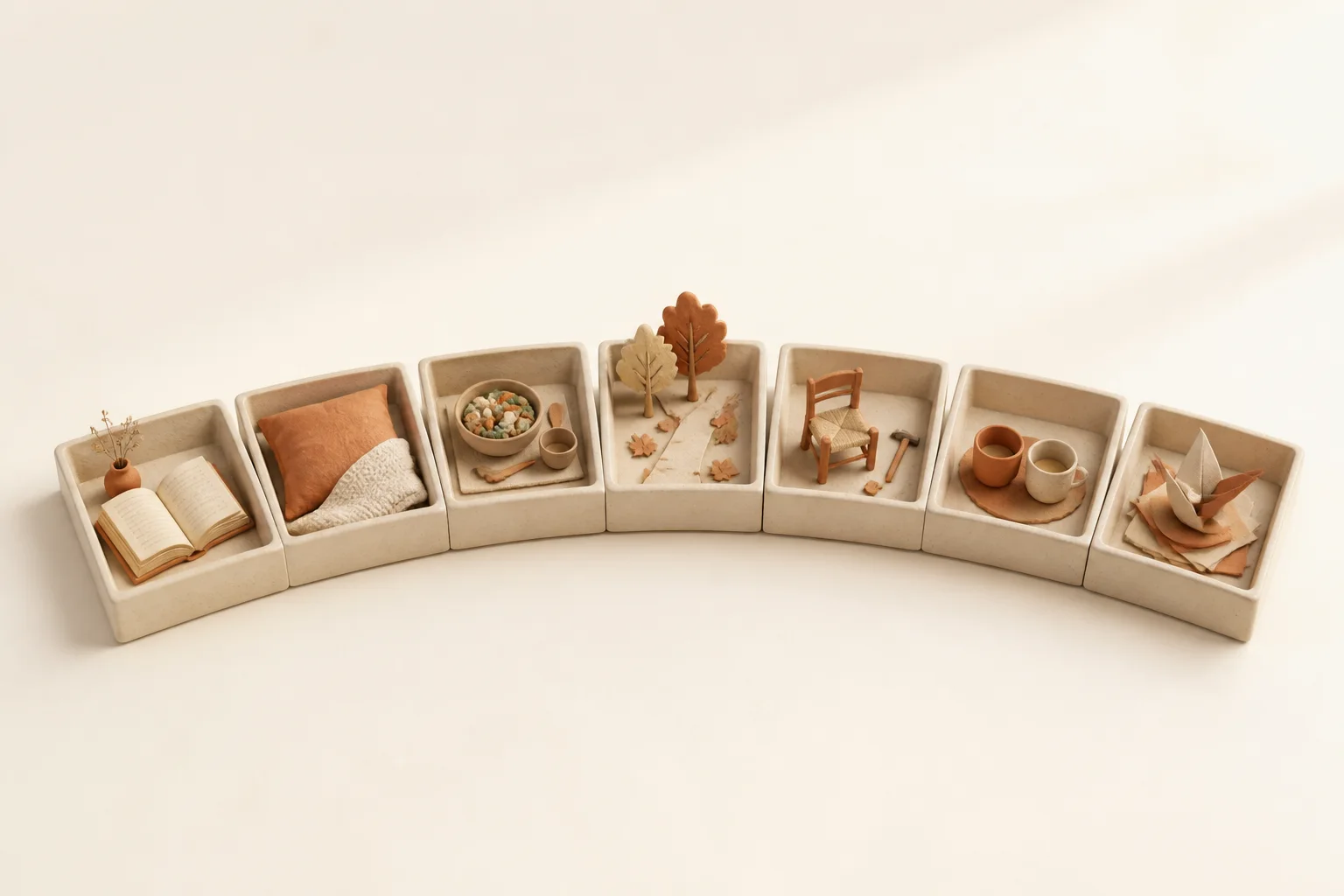
What the picture can—and cannot—say
A life calendar groups consecutive days into seven-day squares. It makes scale visible, but cannot show the quality of a week. Caring for someone, resting, and finishing a project occupy the same space. A filled square is not an achievement score, and an empty square is not an overdue task.
Our default view covers 80 years from the example birthday. That is a canvas size, not an estimate of your personal lifespan. You can choose 20, 40, 60, 100, or 120 years instead. If your reference date has passed the chosen span, select a larger canvas. Nothing about your life has expired.
Why a row is not an exact year
Each row holds 52 squares of seven days: 364 days in total. A common calendar year has 365 days and a leap year has 366. We keep squares at a consistent seven days, so row numbers should not be read as exact ages. An extra partial square covers the final days of the chosen span.
From January 1, 2000 to January 8, 2000, seven calendar days have passed. The first square is complete and the second marks the current week. On the birth date itself, zero days have elapsed and the first square is the current week.
A fifteen-minute exercise for next week
Look back over the past seven days and name one thing that made the time feel worthwhile. It might be a walk, a repaired chair, or dinner without your phone. Choose one thing to repeat next week and give it a specific time slot. Check whether that slot would displace sleep, essential work, or caring responsibilities. If so, make the plan smaller.
“Read more someday” could become “read for twenty minutes on the sofa after dinner on Wednesday.” The calendar will not carry out the plan. It can remind you that a distant intention needs a small place in the near future.
When the view feels unhelpful
Leave the calendar and use the date-distance tool for one upcoming event instead. You can also save a calendar and revisit it in a few months, rather than checking every day. Its purpose is perspective, not self-surveillance.
The download creates an SVG with your completed weeks, reference date, and chosen span, without writing your birth date directly. Someone could still infer an approximate age from the week count. Share only what you are comfortable making public. The file is created in your browser without an account.
Try it with your own dates
Open the calculator ↗Keep reading
Your 10,000-day milestone: a date between birthdays ↗
Days between dates: decide what you are counting ↗
A 168-hour week: build a time budget you can revise ↗
What can twenty minutes do? Plan an investment, not a promise ↗
Put a day milestone in your calendar: check before and after import ↗